Saturday, 26 November 2011

Dead Man's Pennies

It took over a year from the beginning of the First World War in 1914 before the British Government took the decision that some sort of official token of recognition and gratitude should be given to the next of kin of fallen service men and women.

In 1917 a public competition to design a commemorative token was announced in The Times newspaper and that the format should be in the form of a plaque.
The words ‘He/She Died for Freedom and Honour’ were to be included.

From over 800 entries, the design chosen was that of Edward Carter Preston of Liverpool – a 12 centimetre disk to be cast in bronze entitled ‘Pyramus’.


The individual elements of the design each had their own meanings:

Brittania, the personification of Great Britain holding Poseidon’s Trident, her head slightly bowed towards the named individual offering a laurel wreath, an ancient symbol of triumph or victory.

A striding lion symbolising the power and strength  of the British Empire crushing an eagle.
(The eagle representing the central powers)

Two leaping dolphins symbolising Britain’s naval power

Oak leaves representing strength and endurance.

No rank was shown in order that no distinction would be made, only the equality of sacrifice.

Out of the thousands and thousands of plaques and scrolls produced and sent out,
only 600 were issued to women.


The above scroll was sent out separately.
Some relatives returned the pennies as they felt insulted as this could never replace the life of a loved one whilst others treasured them.
The practice of having them mounted on Family Gravestones became quite common as can be seen on the photograph below, although many of these seem to have disappeared/are missing.
This of course could be due to unsuitable adhesives being used and the plaques have simply fallen off over time, or, as they’ve become popular ‘collector’s items’ (and can sell for quite a considerable amount of money), have been removed by ‘other’ means.


Names have been edited out of the photos of the still 'intact' plaques for obvious reasons!!


Saturday, 29 October 2011

Frederick Pattison Pullar, Bridge of Allan, Stirlingshire

The following is a transcription of an article written by James Chumley, (Challenger Office, Edinburgh) Secretary to Sir John Murray on 27th February 1901.

THE LATE F. P. PULLAR.

A melancholy interest attaches to the paper on the Scottish Lochs which appears in this number of the Geographical Journal and Scottish Geographical Magazine, owing to the tragic death of one of the authors, Mr F. P. Pullar, since the paper was passed for press.

On February 15, while several hundred persons were skating on Airthrey Loch, in the grounds of Airthrey Castle, near Bridge of Allan, the ice suddenly gave way, and a number of people were precipitated into the water. Mr Pullar, who was a strong, muscular young man and a powerful swimmer, at once rushed to the rescue of those who were immersed, plunging into the water and floating ice with his skates on. He successfully assisted three of them to land, and then went to the succour of a young lady who was in an exhausted condition. It is confidently asserted by spectators, some of whom were submerged in their efforts to assist, that he might easily have saved himself had he relinquished his burden : this he refused to do. He supported the young lady for some time, but before help reached them his strength failed, and they both sank, their bodies not being recovered till three-quarters of an hour afterwards. This sad event cast a gloom over the whole district, and great sympathy was expressed for his bereaved parents, and for his only sister, who had just left the ice before the accident occurred. On February 19 he was buried in Logie Churchyard, attended by an immense concourse of mourners, and amid every expression of sorrow and sympathy.


Frederick Pattison Pullar was born at Bridge of Allan on the 20th December 1875, and was the only son of Laurence Pullar, Esq., of The Lea, Bridge of Allan and his wife Ellen Ferguson Pattison, and was a nephew of Sir Robert Pullar of Perth. In his earlier years he was rather a delicate child, and much of his education was conducted at home under private tutors. Later on his health improved, and his education was continued at the Stanley House School, Bridge of Allan, and the High School of Stirling. Afterwards he attended the Glasgow and West of Scotland Technical College in Glasgow, where he exhibited a marked ability for mathematics, mechanics, and applied science generally. He ultimately entered his father's business, but devoted a good deal of his time to scientific pursuits and studies. By his frank and genial nature he became endeared to the large number of workpeople employed by the firm of Robert Pullar & Sons.


About five or six years ago, while cruising in his father's yacht, the Freya,, he, under the guidance of Sir John Murray, commenced to take an interest in oceanographical observations and problems, exhibiting a lively devotion to the practical work carried on at the Marine Biological Station, at Millport. He enthusiastically embraced the study of meteorology, and established at his father's residence at Bridge of Allan a complete meteorological observatory, his instruments including deep earth thermometers. He became a member of the Royal Meteorological Society and of the Scottish Meteorological Society, sending in reports regularly to the last-mentioned Society during the past five or six years. He presented a complete set of meteorological instruments to the Scottish Hospital which proceeded to South Africa last year under Professor John Chiene. A room in his father's house was fitted up as his own private workshop, in which he had many ingenious and interesting mechanical, electrical, and photographic contrivances, together with considerable geological collections. He was an enthusiastic cyclist, and within the last year or two had three or four kinds of motor vehicles. He had an intimate knowledge of these machines, and his advice was frequently sought by automobilists; indeed, he proceeded to the scene of the disaster in a motor car, which was standing at the side of the loch when he met his death. He was an Associate of the Institution of Mechanical Engineers, and an active member of the Automobile Club.


About three years ago, in conjunction with Sir John Murray, he undertook a systematic bathymetrical survey of all the lochs of Scotland, and here his mechanical knowledge and inventive genius were at once exhibited by the improvements he made in the apparatus for taking the soundings. A portable machine was constructed from his designs, which could be firmly and rapidly fixed to the gunwale of the boat from which the soundings were to be taken. He also carried out many improvements in the methods of taking temperatures by means of deep-sea thermometers, in the plungers used for procuring samples of the deposits, and in the apparatus for the capture of organisms at intermediate depths. At the time of his death, among other improvements, he had in contemplation the construction of a motor engine which could be applied to the propulsion of both a car and a boat, so that he might carry with him from his home a boat for taking soundings, transfer the engine to the boat, and re-transfer it when the work was finished to the car again.

The publication of the results of the researches in the Scottish lochs was commenced last year, the first instalment, dealing with the lochs of the Callander and Trossachs district, being published in the Geographical Journal and Scottish Geographical Magazine in April last; and the present number contains a further instalment, dealing with the remaining lochs in the Forth basin. The survey of some other lochs has been completed,but the results are not yet in a state for publication.


In September last Sir John Murray left Britain for the purpose of carrying out explorations on Christmas Island, in the Indian Ocean, and it was arranged that the paper in this Number should be put into form and passed for press by Mr Pullar, with assistance in the Challenger Office. Sir John Murray returned to London on the evening of February 16, and on arrival at his hotel was handed a telegram announcing the death of his young friend on the previous day. They had made arrangements to devote most of the coming summer to the sounding of the lochs, with a view to the speedy completion of the entire survey : this important work will necessarily be interrupted by Mr Pullar's lamented death.

Mr Pullar was elected a Fellow of the Royal Geographical Society in 1896, and he was also a Fellow of the Royal Scottish Geographical Society ; last month he was admitted to the Fellowship of the Royal Society of Edinburgh.

Mr Pullar was beloved by all who knew him. He was a man of great bodily and mental activity, lively disposition, generous and brave, knowing no fear. His friends were justified in believing that a great future lay before him. His promising career has been cut short by an act of devotion. He sacrificed his life in an heroic endeavour to save the life of another.

His life was gentle ; and the elements
So mix'd in him, that Nature might stand up
And say to all the world, ' This was a man !'

Logie Kirk

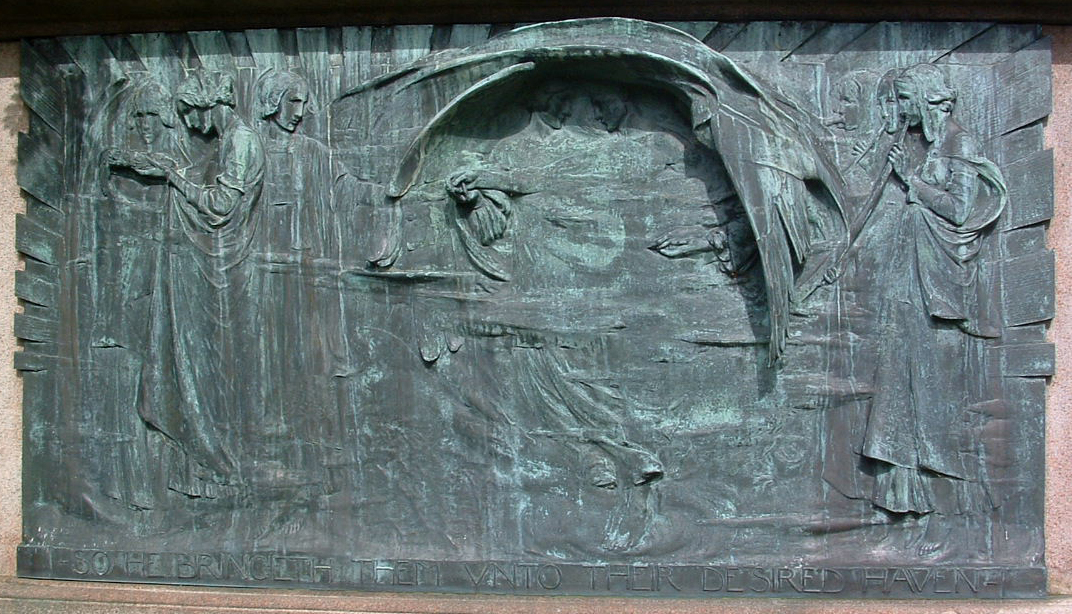
The Memorial Bronze on the Pullar stone in Logie was by Sir G. A. Frampton, R.A.

Further information on the Bathymetrical Survey of the Fresh-Water Lochs of Scotland
can be found at the National Library of Scotland, see:
http://maps.nls.uk/bathymetric/information.html


Friday, 28 October 2011

Thomas Ellis, North British Iron Works, Coatbridge

Thomas Ellis was born on the 30th December 1818 in Whittingham, Shropshire.

Little is known about his early life, although his Obituary states that he was left an orphan from ‘early age’ and that he came to Scotland around 1842.

By the time of the 1851 Census, he was married to Sarah Leonard, had an 8 month old daughter, Sarah Leonard Ellis and was living at English Row, in Gorbals Parish, Glasgow. His occupation in listed on the census as ‘Iron Roller’, employing 3 men. Living with them was also Sarah’s younger brother, Moses Leonard age 20.

Ten years later, in 1861, not only had Thomas, now age 42 & Sarah’s family grown, but they had moved eastward and were living at Phoenix Cottage, Coatbridge, Lanarkshire. On the 1861 Census, his occupation is listed as an Iron Manufacturer and in his employment were 30 men and 10 boys. His place of business may have been ‘Ronald’s Forge’ which had originally been erected in 1840 and on conversion to a malleable iron-work was locally known as ‘the Phoenix’, possibly named after Phoenix Cottage, but around 1870 was changed again - to the North British Iron-Works.

The 1861 Census verifies Sarah’s parents and one sister as they are listed as ‘in-laws’ at Phoenix Cottage. Her father was James Leonard age 72, mother Sarah age 74 and sister Elizabeth age 46

Thomas & Sarah’s children were as follows:

Elizabeth Ellis, born 28th February 1847 at Glasgow
Sarah Leonard Ellis, born c1851 at Glasgow
John William Ellis, born c1854 at Glasgow
Thomas Leonard Ellis, born c1862 at Coatbridge

Moses Leonard, Sarah’s brother had obviously decided to settle in Coatbridge as he also can be found in the 1861 Census living at Main Street, Coatbridge with his wife Margaret (nee Chalmers)
who was born in Falkirk, Stirlingshire.
His occupation, like his brother-in-law Thomas Ellis is listed as Iron Manufacturer.
It is unknown whether Moses and Margaret had any children.

Moses died on the 3rd of May 1879 aged 49 years. His wife Margaret outlived him by 14 years
and can be found on the 1881 & 1891 Census still living in Coatbridge.
Margaret died at Coatbridge on 13th January 1893.


Thomas and Sarah continued to live in Coatbridge and in 1871 at the age of 52,
Thomas was listed as ‘Iron Master’ on the 1871 Census.
Daughter Sarah Leonard Ellis age 20 and sons John William, age 17 and
Thomas Leonard Ellis age 9 were still living at home with them.

John William Ellis is listed as an Art Student at Glasgow University.

In letters dated 12th November 1878 (described in Thomas’s Will), he made the following statement:


By 3rd/4th April 1881, the date of the 1881 Census, Thomas and Sarah were enumerated Whittington Lodge in Bridge of Allan, Stirlingshire, daughter Sarah Leonard Ellis and son Thomas Leonard Ellis now with ages listed on the census as 28 and 19 respectively, were still with their parents. Whittington Lodge was a second property owned by Thomas, the other being Dudley House in Coatbridge.

Thomas Ellis died at Whittington Lodge on 28th July 1884.

The Glasgow Herald of 29th July 1884 printed the notice of his death.


The following transcribed Obituary was contained in the same issue:

Death of Mr. Thomas Ellis, Coatbridge

Mr Thomas Ellis, the sole proprietor and originator of the North British Iron-Works, Coatbridge died at his residence at Bridge of Allan yesterday morning. The deceased had been in feeble health for some time past, and within the past few days his illness became so serious that his demise was looked for at any moment, and it took place about half-past one o’clock in the morning.

Thomas Ellis was the son of a cabinet maker, and was born in Whittingham, Shropshire, in 1818, so he attained his 66th year. At a very early age he was left an orphan, and was living near Wrexham, when his natural inclination led him to enter an iron-work as a mill boy. He also learned the puddling branch of the trade.

He came to Scotland about 1842, and entered Dixon’s work at Govan as a mill roller. Shortly afterwards he became manager of the Dundyvan Iron-works, in which capacity he had ample opportunity for indulging his desire for further knowledge of his business.

He returned to Dixon’s again s a merchant bar roller, and his next step was in starting with his brother-in-law, the late Mr. James Leonard, of a small malleable iron-work which is now known as the Phoenix. This was about 1856; and the firm next took a lease of the Globe Iron-works, and during the three years in which they held that lease Mr. Leonard died. The lease of the Globe having expired, Mr. Ellis feued a piece of ground on the Dundyvan estate, and upon this he has reared that great iron-work which is known all over the world. The North British Iron-works, by which name this remarkable work has been known, was founded in 1870, Mr. Ellis being himself the sole partner. It was necessarily a work of comparatively small pretentions. It was the first of the kind in Coatbridge, and was destined under the indomitable perseverance and shrewd business qualities of its projector to take the lead in the malleable-iron trade exported from Scotland.

It started with an output of 40 tons a-month, and the name and class of the iron soon claimed a high position in the home and foreign markets. It was known as the N.B. Crown Brand, and only two years ago the enterprising proprietor purchased the sole right to use the Govan Star Brand – these two brands being well-known throughout the world, large quantities of the iron with these brands having especially gone to India, Australia, and other colonies. From 40 tons a-month 13 or 14 years ago, the output of the North British Works now averages 2000 tons monthly. The number of men employed is considerably over 500, and the coal consumed every 24 hours is about 180 tons.

Mr. Ellis was a man of exceptional energy and perseverance, and worked on the principle of doing everything well that was worth doing. His success in business is probably due to the fact that he worked himself up from the lowest position to the highest, and thus had a practical and thorough knowledge of all its workings. Having been a workman himself he took a deep interest in all that concerned the men in his employment, and was always ready to deal amicably in cases of dispute, over dealing magnanimously and with characteristic generosity in cases where he recognised the men’s interests to be really affected. He did not, however, approve of the union principle, and union men have never, since the last strike, been accepted as workmen in the North British. In politics Mr. Ellis did not figure conspicuously on public occasions, but was known to lean to the Conservative side, although he also accepted a good part of the Liberal creed. In religion he was a member of the Wesleyan Society, and his interest in that body in Coatbridge is best shown by the liberality with which he built the present handsome edifice of St. ThomasWesleyan Church, which cost him a sum of £4000. Up until the time of his death he held the office of Circuit Steward in St. Thomas’ Church.

Mr. Ellis was married to a daughter of the late Mr. James Leonard, Gateshead, by whom he has had a large family. He is survived by a widow, two sons and a daughter, all of whom are grown-ups. Another daughter, who died two years ago, was married to the Rev. Mr. Chambers, late incumbent of St. Thomas’s Wesleyan Church, Coatbridge.

In an extract from his will, Thomas said:


Seven years after the death of Thomas, the 1891 Census finds Sarah Ellis (widow of Thomas), daughter Sarah and son Thomas boarding at the ‘Hydro’ in Logie Parish, Perthshire. This is more than likely to have been the Spa at Bridge of Allan which would have been relatively close to Whittington Lodge.

The following two images show how the Spa appeared in the 1930’s.


Sarah Leonard, widow of Thomas Ellis died 4th February 1895.


Elizabeth Ellis, eldest daughter of Thomas and Sarah married Wesleyan Minister Jabez Chambers shortly after the 1871 Census. They can be found on the 1881 Census living at the Wesleyan Manse in Coatbridge with 3 sons: Albert Ellis Ernest Chambers age 10 (born c1871), Thomas Chalmers age 9 (born c1872) and Ernest Harold Jabez Chambers age 2 months (born 1881). Elizabeth died on 27th June 1882 age 35.

They had another two children, Leonard John Chambers born 29th December 1876 and Sarah Ellis Chambers born c1878. Both these children were with their grandparents Thomas & Sarah Ellis at Whittington Lodge in Bridge of Allan, Stirlingshire at the time of the 1881 Census.
Leonard John died 18th January 1882 age 5 years 11 months.

After the death, of his wife and child, Jabez Chambers moved away from Coatbridge and was enumerated on 1891 English Census with children Sarah and Ernest at Grantham in Lincolnshire. By 1901, had moved to Devon and had remarried.

Sarah Leonard Ellis, Thomas & Sarah’s 2nd daughter is enumerated on the 1881 Census as both Sarah Millet and Sarah Ellis, age 28. This indicates that she had been married and was possibly a widow back living with her parents. Her year of birth would have been around 1852 which is a close match with the Sarah Leonard Banner in the following photograph

John William Ellis, eldest son of Thomas and Sarah was a Student of Arts at Glasgow University in 1871. He was the son whom his father wished not to have anything to do with the Management of the North British Iron-works (see previous extracts from Thomas’s will).
He is listed on the 1881 Census as living at John Street, Coatbridge with his wife Jane,
their son John W. L. Ellis age 3 and daughter Jane P. L. Ellis age 1.

Strangely, his occupation is listed as Ironwork Manager – of course he may have been a Manager in one of the neighbouring businesses rather than the North British!

John William and Jane’s eldest son was Thomas Ellis,
who died on the 4th February 1881 aged 4 years and 10 months.

Like his mother Sarah, sister and brother (Sarah and Thomas), John and his family were boarding at the ‘Hydro’ in Logie Parish, Perthshire in 1891. His occupation is listed as Ironmaster. The individuals are all listed as ‘Boarders’ and no family relationships appear, but  there are 2 Ellis children alongside John and Jane - John W. L. Ellis age 13, known to be their son and a Sarah L. Ellis age 8, probably their daughter. Their third son James Leonard Ellis who was born c1884, and would be around 7 years old is not with the family.

John William Ellis died on 28th November 1891 aged 38 years and as can plainly be seen from the following photograph – he seems to have had a definite connection with the North British Iron-works!


Thomas Leonard Ellis, second son of Thomas and Sarah was born c1862 and died at
Whittington House, Dunbeth Avenue, Coatbridge on 27th March 1897 aged 35.

He married Elizabeth (Lizzie) Ritchie Lindsay at Gartsherrie Parish Church on 18th April 1893
Lizzie was the daughter of John Lindsay, Portioner and Jane Lindsay nee Pettigrew of Rosslyn House, Coatbridge.


His occupation on the 1881 Census is listed as Clerk in Iron Works, in the 1891 Census as Iron Manufacturer and as Ironmaster on his marriage and death registration.


The Ellis Family Lair in in Section 19 of Old Monkland Cemetery, Coatbridge.


Friday, 21 October 2011

Sylvester Douglas Stirling

Stirling Families of Glenbervie & Tarduf

Sylvester Douglas Stirling, 12th Child and 7th son of John Stirling and Mary Graham of Kippendavie.

Born 3rd February 1803 and christened 24th February 1803 at Dunblane (Perthshire).

Married Anne Patricia Craigie Connell 7th September 1830 at Larbert.
(Anne was born 31st August 1811, daughter of David Connell)

Bought ‘Woodside’ Estate in 1832, changing the name to ‘Glenbervie’.

The couple went on to have 5 (known) children:

Isabella C. H. Stirling
Born 1831, died 1862

Anne Douglas S. Stirling
Born 1834, died 29th March 1867 at Edinburgh
(Married Major William Stirling, 2nd June 1864)
Children:
Anne Douglas Stirling, born 1865
Charlotte Dorothea Wylie Stirling, born 1867

*Mary Catherine (or Katherine) Stirling
Born c1833, died 28th July 1915
(Married William Stirling, her first cousin, 26th July 1855 at Glenbervie)

*More on Mary Katherine and her family later in article

Charlotte Jane Stirling
Born 1838, died 1866

Charles Douglas Stirling
Born 18th May, 1840, died 29th April 1856

The 1841 Census finds the family living at Glenbervie
Head of Household: S.D. (Sylvester Douglas) Stirling, age 35
A.C. (Anne Craigie/Connell) Stirling, age 29, Wife
I. G. H. (Isabella G. H.) Stirling, age 9, Daughter
M. K. (Mary Katherine) Stirling, age 7, Daughter
A. D. (Anne Douglas) Stirling, age 6 Daughter
C. J. (Charlotte Jane) Stirling, age 2, Daughter
C. D. (Charles Douglas) Stirling, age 1, Son

The Glasgow Herald, 4th September 1846 (Page 2)
Prints the death on 2nd September 1846 of Sylvester D. Stirling, Esq. of Glenbervie.


The Glasgow Herald, 7th September 1846 (Page 4) prints an Obituary


After her husband’s death, Mrs Stirling built the ‘new’ Glenbervie
and the previous Glenbervie was demolished.


The 1851 Census finds the family living at Glenbervie House
Head of Household: Anne Craigie Stirling, age 39, Landed Proprietor
Anne Douglas Stirling, age 16 Daughter
Charlotte Jane Stirling, age 12, Daughter
Charles Douglas Stirling, age 11, Son … not there

Son Charles Douglas Stirling died 29th April 1856

The 1861 Census finds the family living at Torquay in Devon
Head of Household: Anne C. Stirling, age 49
Isabella G. H. Stirling, age 29, Daughter
Anne Douglas Stirling, age 26 Daughter
Charlotte Stirling, age 22, Daughter

Daughter Isabella G. H. Stirling (wife of Major William Stirling) died 1862

Daughter Charlotte Jane Stirling died 1866


Stirling Family Enclosure in Larbert Old Parish Churchyard

The 1891 Census finds Anne living at Glenbervie House
Head of Household: Anne C. Stirling, age 79, Landed Proprietor
Anne D. Stirling, age 25, Grand- Daughter

Ann Stirling died 1899 and the trustees sold the Glenbervie Estate to James Aitken of Darroch
(of Russell & Aitken, Solicitors, Falkirk)


*Mary Catherine (or Katherine) Stirling, daughter of Sylvester Douglas and Anne  Stirling
Born c1833, died 28th July 1915
(Married William Stirling, her first cousin, 26th July 1855 at Glenbervie)
(Known) Children:
Mary Graham Stiring, born 1857, died 1923
Elizabeth Barrett Stirling, born 1859, died 1923
William George Hay Stirling, born c1862
Sylvester Douglas Stirling, born 1863, died 1924
Sylvia Anne Stirling, born 23rd February 1864, died 31st January 1866
Charlotte Douglas Stirling, born 2nd May 1866, died 12th June 1935
Rose Isabel Stirling, born 30th August 1868, died 4th January 1893
James David Stirling, born 11th December 1873, died 11th March 1910 (India)

The 1881 Census finds the family living at Tarduf Mansion in Muiravonside, Stirlingshire
Head of Household: William Stirling, age 59, Magistrate & West India Merchant
Wife: Mary Katherine Stirling, age 48
Mary Graham Stirling, age 23, Daughter
Elizabeth Barrett Stirling, age 22, Daughter
William George Hay Stirling, age 19, Son, Lieutenant, Highland & Border Militia
Sylvester Douglas Stirling, age 7, Son
James David Stirling, age 7, Son

The following photographs are of the Stirling Enclosure in Muiravonside Churchyard.


To the loved memory of WILLIAM STIRLING …..? died 28th March 19?? aged ..? years
And MARY KATHERINE his wife died 28th July 1915 in her …? year

SYLVIA ANNE born 23rd February 1864 died 31st January 1866
ROSE ISABEL born 30th August 1868 died 4th January 1893
Laid in Abney Park Cemetery, London

In loving memory of Capt. JAMES DAVID STIRLING
D.S.O. Wildes Rifles Frontier Force, Indian Army, 3rd son of William Stirling of Tarduf
Born December 11th 1873 killed in action on the North West Frontier of India
March 11th 1910 and laid in the Cemetery at Bannu, faithful unto death
And of ELIZABETH BARRET STIRLING born 1859 died 1923 laid in New Kilpatrick
MARY GRAHAM STIRLING born 1857 died 1923 laid in Warriston
SYLVESTER DOUGLAS STIRLING born 1853 died 1924 laid in Warriston
CHARLOTTE DOUGLAS STIRLING born May 2nd 1856 died June 12th 1935
Laid to rest in Warriston

The Aitken Family who purchased Glenbervie after the death of Anne Stirling have an impressive memorial in Camelon (Falkirk) Cemetery.


JOHN AITKEN, L.L.D., F.R.S., born 18th September 1839
Died at Ardenlea, Falkirk 13th November 1919
ROBERT AITKEN, born 4th December 1840
Died at Rosemount, Colmonnel, Ayrshire 4th May 1907

WALTER AITKEN, Major in the 42nd Regiment “The Black Watch”
Born 10th April 1842, killed at the Battle of Tamai, (Tamanieh) Egyptian Sudan, 13th March 1884
JESSIE AITKEN of Glenbervie, Larbert, daughter of Henry Aitken, Writer, Falkirk
Born 4th September 1843 died at Glenbervie 29th October 1923

ROBERT WALKER AITKEN son of James Aitken, Writer, Falkirk
Born 13th February 1811 died at Edinburgh 22nd February 1872
RUSSELL AITKEN, Civil Engineer, Bombay and London
Born 23rd July 1837 died at London 8th April 1915

JAMES AITKEN, Writer of Darroch and Glenbervie, eldest son of Henry Aitken, Writer, Falkirk
Born 26th November 1834 died at Darroch 17th December 1911
HENRY AITKEN, Coalmaster, Falkirk born 4th July 1838
Died at Darroch 21st November 1903

Glenbervie House is now a hotel.